
Home // Exclusive Collection // Persian Serfaiyan Isfahan Tree of Life Prayer Rug
Persian Serfaiyan Isfahan Tree of Life Prayer Rug
Exquisite Isfahan Seirafian prayer rug featuring masterful knotting, refined Tree of Life artistry, premium materials, and a woven signature—an exceptional collectible of enduring cultural elegance.
Price on application
Origin
Isfahan, Iran
Circa
1980
Dimensions
1.71m x 1.08m (5'7" x 3'7")
Material
Pure silk warp and weft and the pile is a mix of silk and wool
Condition
Perfect
Provenance
Sourced directly from private estate
Composition
Pure silk warp and weft and the pile is a mix of silk and wool. Natural silkworm silk. Natural silk used in rugs comes from the silkworm, specifically the Bombyx mori, which has been domesticated for thousands of years to produce mulberry silk, which is the finest and most widely used type of silk in high-end rug weaving.
Silk used in rugs is a natural protein fibre produced by silkworms as they spin cocoons. The fibre is:
Extremely strong (stronger than steel of the same diameter)
Very fine and smooth
Naturally lustrous, giving silk rugs their signature shimmer
Flexible and soft, allowing for high knot density
Silkworms (Bombyx mori) are raised on a diet of mulberry leaves and after about a month, the worms spin cocoons made of a single, continuous silk filament. The cocoons are boiled or steamed to kill the pupae and loosen the fibres, after which, the silk is unwound (reeled) into strands and twisted into yarn for weaving.
Kurk wool is the preferred sheep’s wool used in fine traditional rug‑making, prized for its exceptional softness, sheen, and durability. It is shorn exclusively from the neck and underbelly of young lambs, where the fibres are naturally shorter, silkier, and more uniform. Because these areas are limited in size, each animal yields only a small quantity of Kurk wool, making it rare and highly sought after material.
This premium fibre has a natural lustre that enhances the depth and richness of dyes. Over time, the wool’s natural oils gradually release, causing colours to mellow beautifully and the surface to develop a subtle patina. These qualities give Kurk wool rugs a distinctive elegance that deepens with age.
In fine Persian and Turkish weaving, including Isfahan, Nain, and Kashan production, Kurk wool is often reserved for the finest and most detailed pieces, where its delicacy can highlight intricate designs and contribute to a luxurious underfoot feel.
Description
Isfahan rugs are among the most prestigious and refined Persian carpets, often considered the epitome of Persian court weaving. They are renowned for their exquisite craftsmanship, intricate designs, and luxurious materials, making them highly collectible and often displayed more as art than functional floor coverings.
Rug weaving here flourished during the Safavid Dynasty (16th-17th century) when Shah Abbas I turned Isfahan into a cultural and artistic capital. beneath the medallion. The Serfaiyan is widely considered the pinnacle of Persian carpet artistry. These rugs are not only beautiful but also historically important and highly collectible and were made by the Seirafian family workshop, especially under the influence of Ustad Haj Agha Reza Seirafian and his descendants.
Haj Reza Seirafian (1881–1975) is considered the father of modern Isfahan rug weaving and this masterpiece was woven in Isfahan by the legendary master weaver Bagher Seirafian workshop, who is one of the most celebrated names in Persian carpet‑making. Founded in the mid‑20th century by Master Weaver Bagher Seirafian, the atelier set an uncompromising standard for technical perfection, artistic refinement, and material quality, earning an enduring reputation among collectors and connoisseurs worldwide.
Bagher Seirafian rugs are distinguished by their meticulous knotting, elegant composition, and harmonious colour palettes. Designs often feature intricate medallions, arabesques, and floral scrollwork inspired by Persian garden and architectural motifs. The weaving is executed with precision so fine that every detail appears crisp and painterly. Today, authentic Bagher Seirafian rugs are both decorative treasures and highly collectible investment pieces, representing the pinnacle of Isfahan’s weaving tradition.
This exquisite hand‑woven prayer rug also features the Tree of Life design, which is one of the most enduring and symbolic motifs in traditional weaving. Rising gracefully from the base of the field, the tree extends upward with branching stems, blossoms, and foliage, often accompanied by stylised birds, floral sprays, or fruit. It represents eternal life, spiritual growth, and the connection between earth and the divine.
The composition is framed within a mihrab (prayer arch), guiding the viewer’s gaze upward, mirroring the posture and intention of prayer. The refined drawing and harmonious arrangement of floral elements create a balanced, meditative visual rhythm, while the intricate detailing reflects the work of a highly skilled weaver.
More than just a prayer mat, this piece serves as a woven expression of faith and artistry — equally treasured for its devotional purpose and as a decorative textile rich with cultural meaning. It can be displayed on the floor, hung on a wall, or preserved as part of a fine rug collection.
This rug is also signed, and a signature on a Persian rug carries cultural, artistic, and market significance, and can offer valuable insight into the origin, quality, and intent behind the piece. It is usually a woven inscription, often found along the top or bottom border, or just below the central medallion, especially in silk or city rugs. It is not hand-written, but part of the weaving itself and is knotted with the same care and precision as the rest of the rug.
The signature ties the rug to a specific weaver, style or region and is often a mark of artistic integrity Signed rugs from known regions or craftsman can create significant value and are generally woven into the pieces the master weavers are most proud of. Many Isfahan rugs, especially those from well-known master weavers (like Seirafian, Enteshar, or Haghighi), are signed in the border or beneath the medallion.
In addition, this rug has been dyed with chrome dyes. Chrome dyes are synthetic dyes that use chromium salts (chromium mordants) to fix the colour to the wool fibres. The process was developed in the late 19th and early 20th centuries and quickly became popular in the rug‑making world because it solved two key problems of earlier synthetic dyes: poor lightfastness and colour bleeding.
Chrome‑dyed rugs often have clear, even, uniform colours without the natural “abrash” (subtle colour variation) seen in vegetable‑dyed rugs. Many 20th‑century Persian, Turkish, and Afghan rugs, especially those made for export, used chrome dyes and in fine handmade rugs, chrome dyes are often mixed with vegetable dyes to achieve a balance of vibrancy and natural variation.
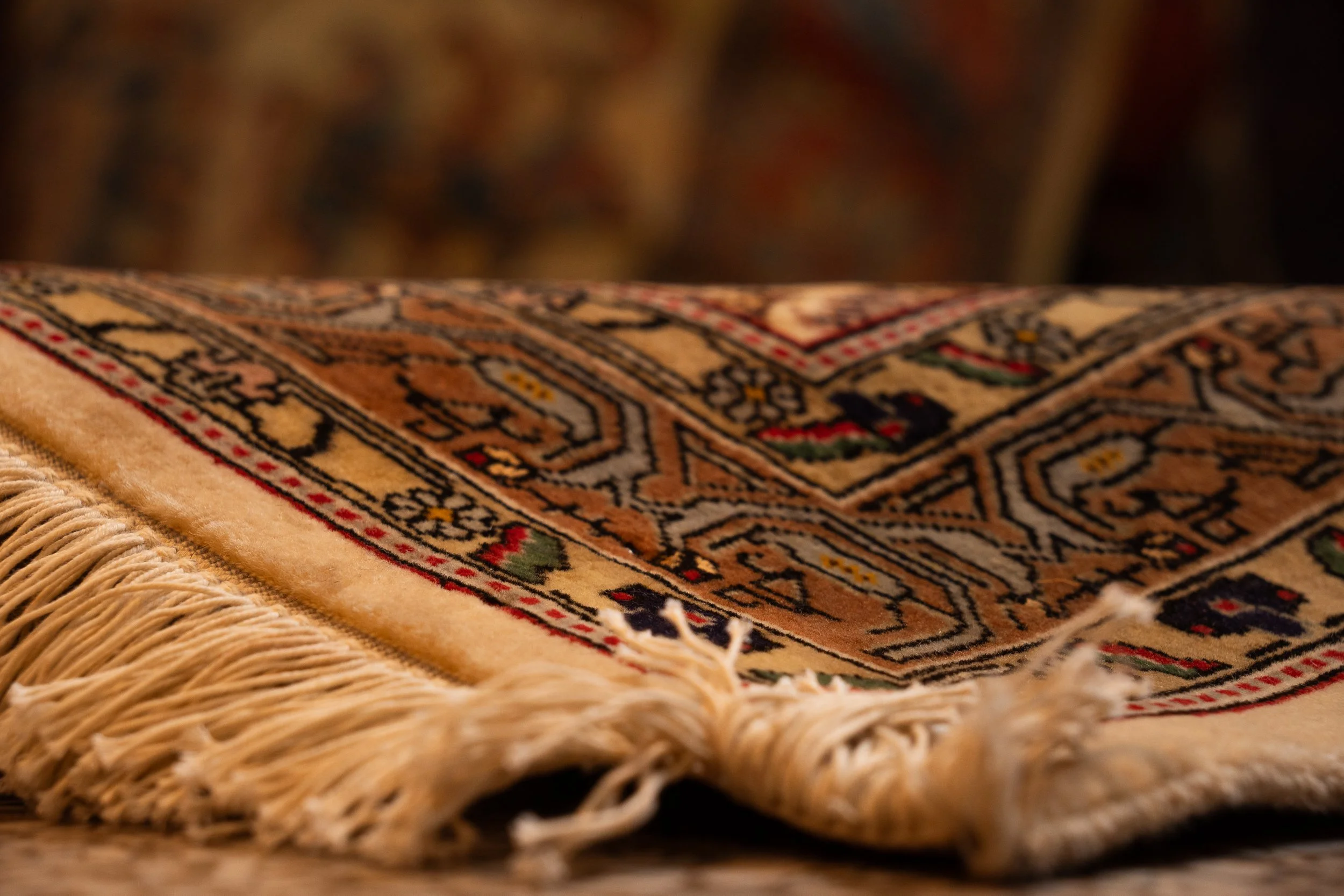
Lastly, a Persian knot, also known as the asymmetrical knot or Senneh knot, is one of the two main types of knots used in hand-knotted rug weaving. The Persian knot is an asymmetrical knot that wraps around one warp thread and under the adjacent one, allowing for finer detail and greater density in the rug design. The yarn is looped around one warp thread (vertical foundation fibre) and then pulled under the next, not enclosing both warps. This asymmetry creates a slightly offset pile knot and the ends of the knot come out between the warps, giving a more compact and flexible surface.
1.71m x 1.08m
(5'7" x 3'7")
Size
Material
Pure silk warp and weft, silk and wool mix pile
Isfahan, Iran
Region
Condition
Provenance
Perfect
Sourced directly from private estate
Curator’s recommendations
-
2.39m x 1.72m
-
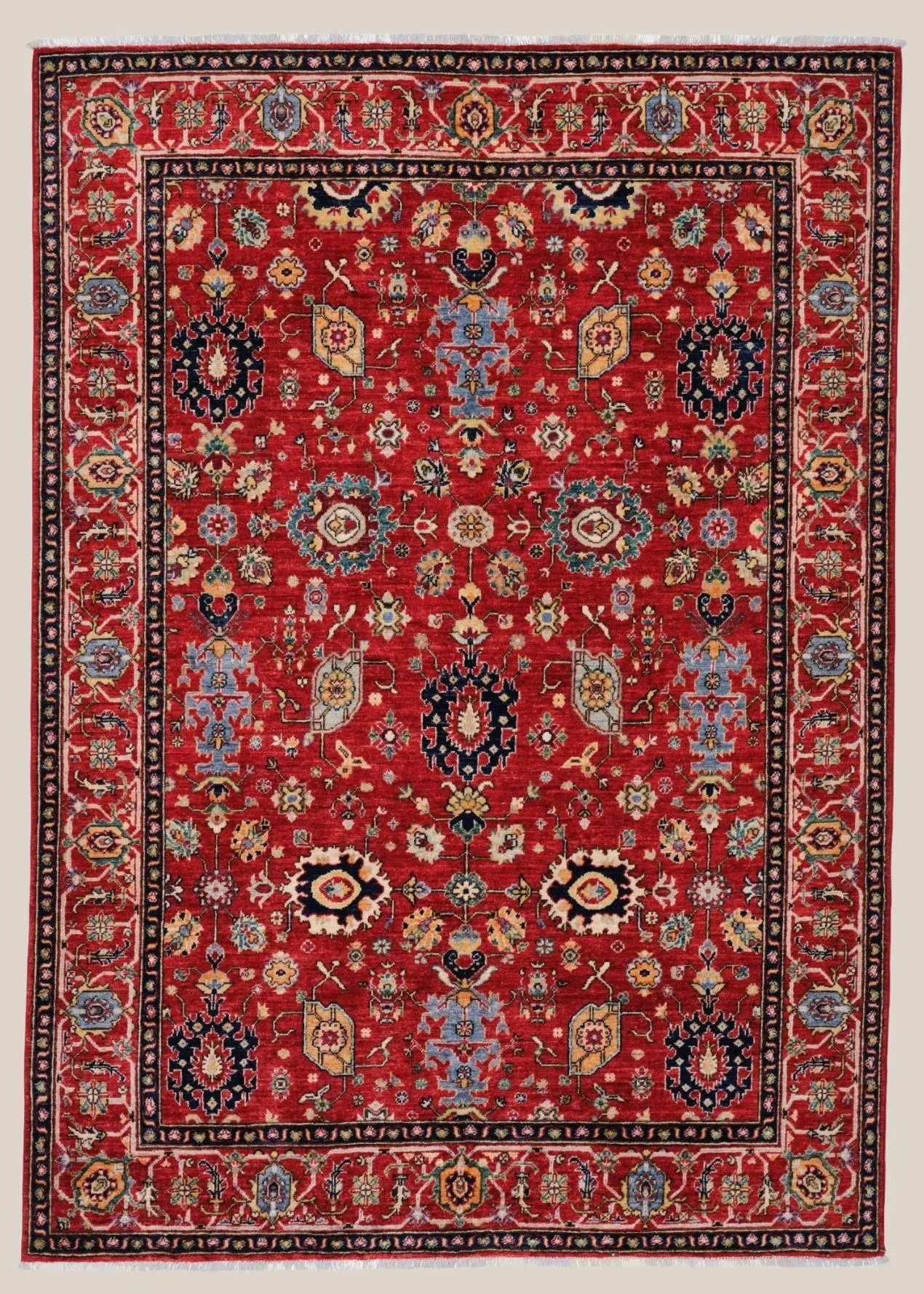
An Afghan Agra rug is a hand-knotted rug that features a design inspired by traditional Agra rugs from India, but woven in Afghanistan.
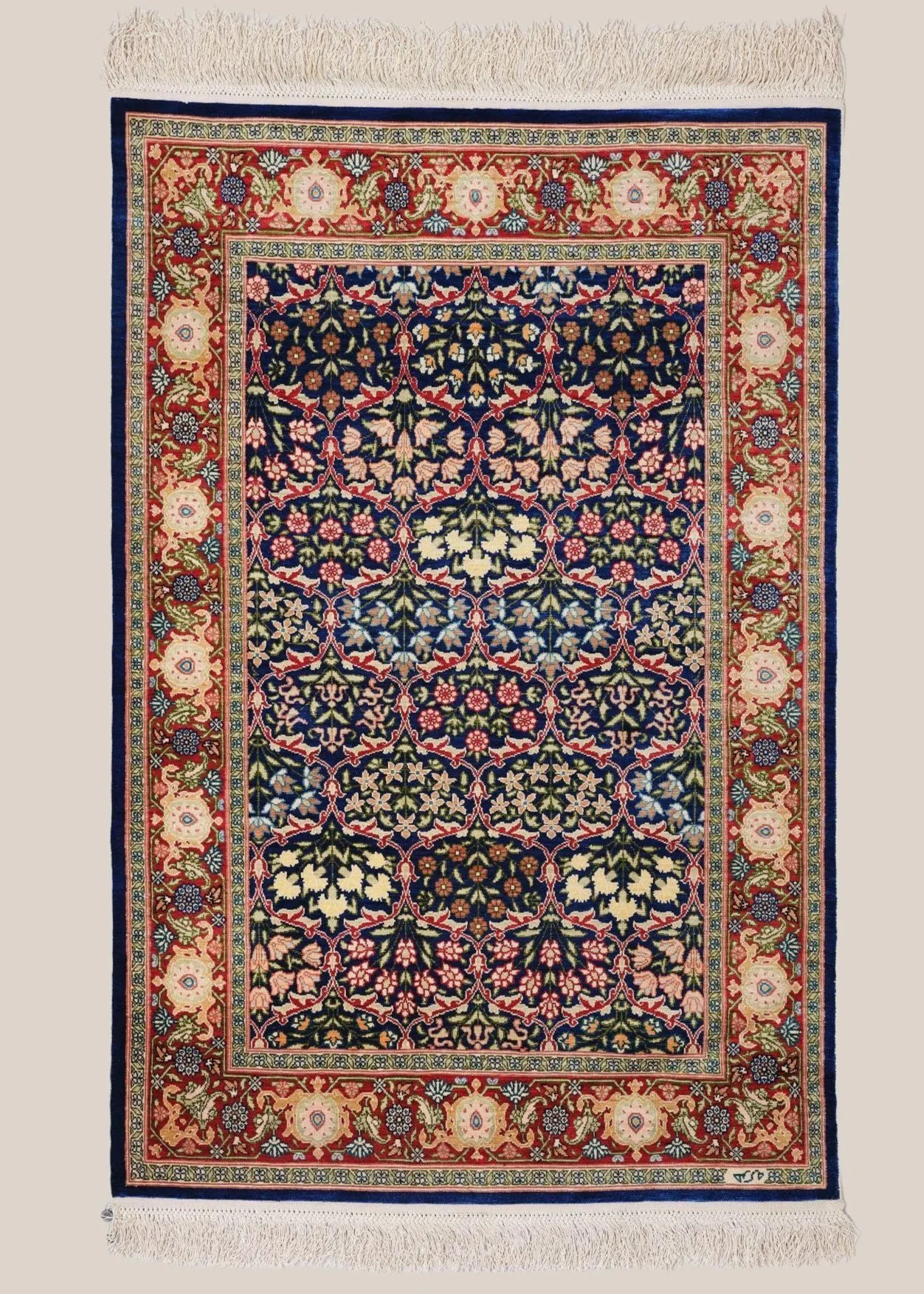
Mille Flour Turkish Hereke
-
2.39m x 1.72m
-
This silk rug exemplifies Ottoman weaving heritage, featuring intricate floral designs, Turkish knots, chrome dyes, and signatures symbolizing artistry, prestige, and exceptional craftsmanship.
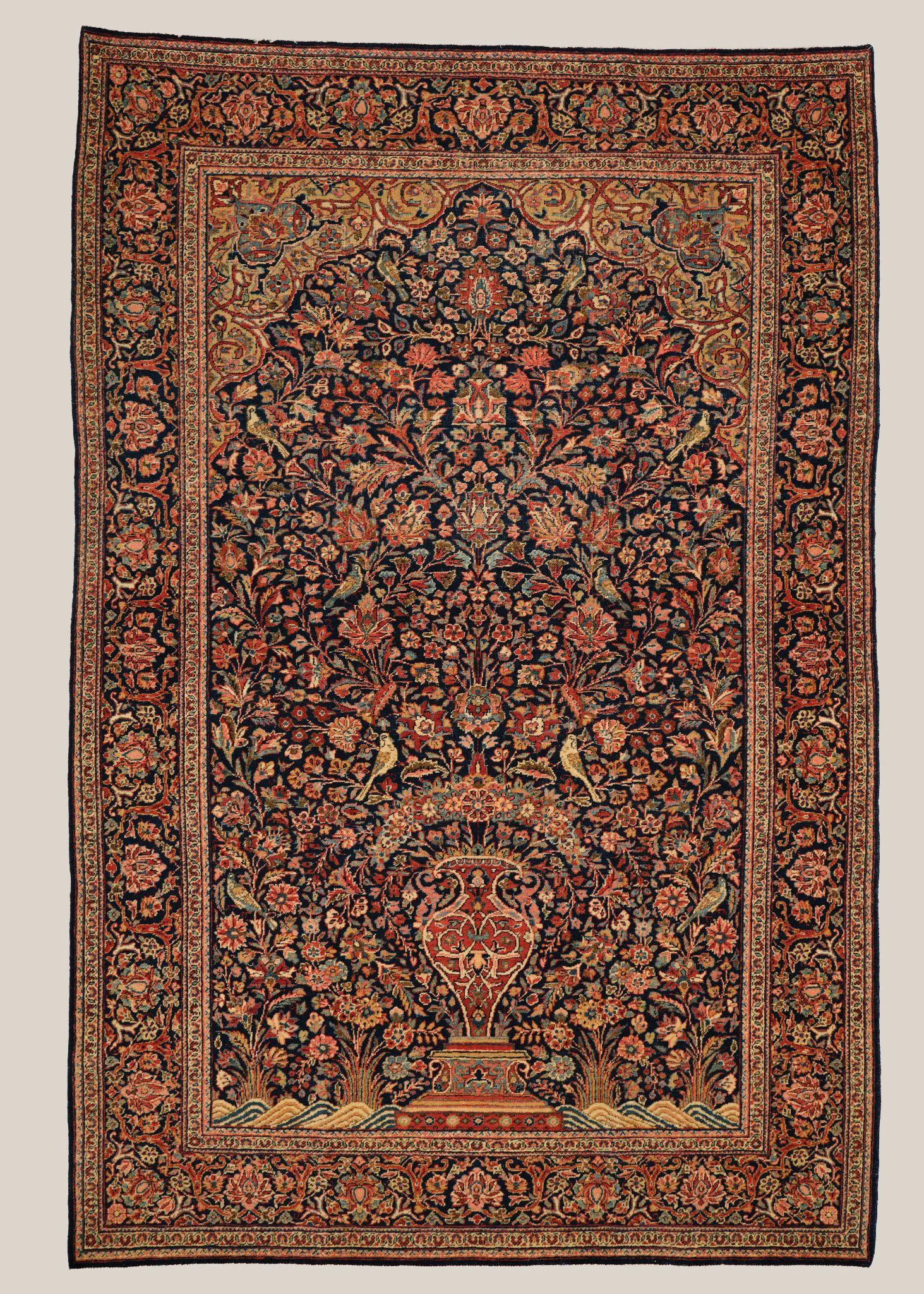
Persian Kashan Tree of Life
-
2.39m x 1.72m
-
Detailed description of Persian Kashan Tree of Life rug, materials, dyes, knots, kurk wool, craftsmanship, and symbolic design.
Turkish Boteh Hereke
-
2.39m x 1.72m
-
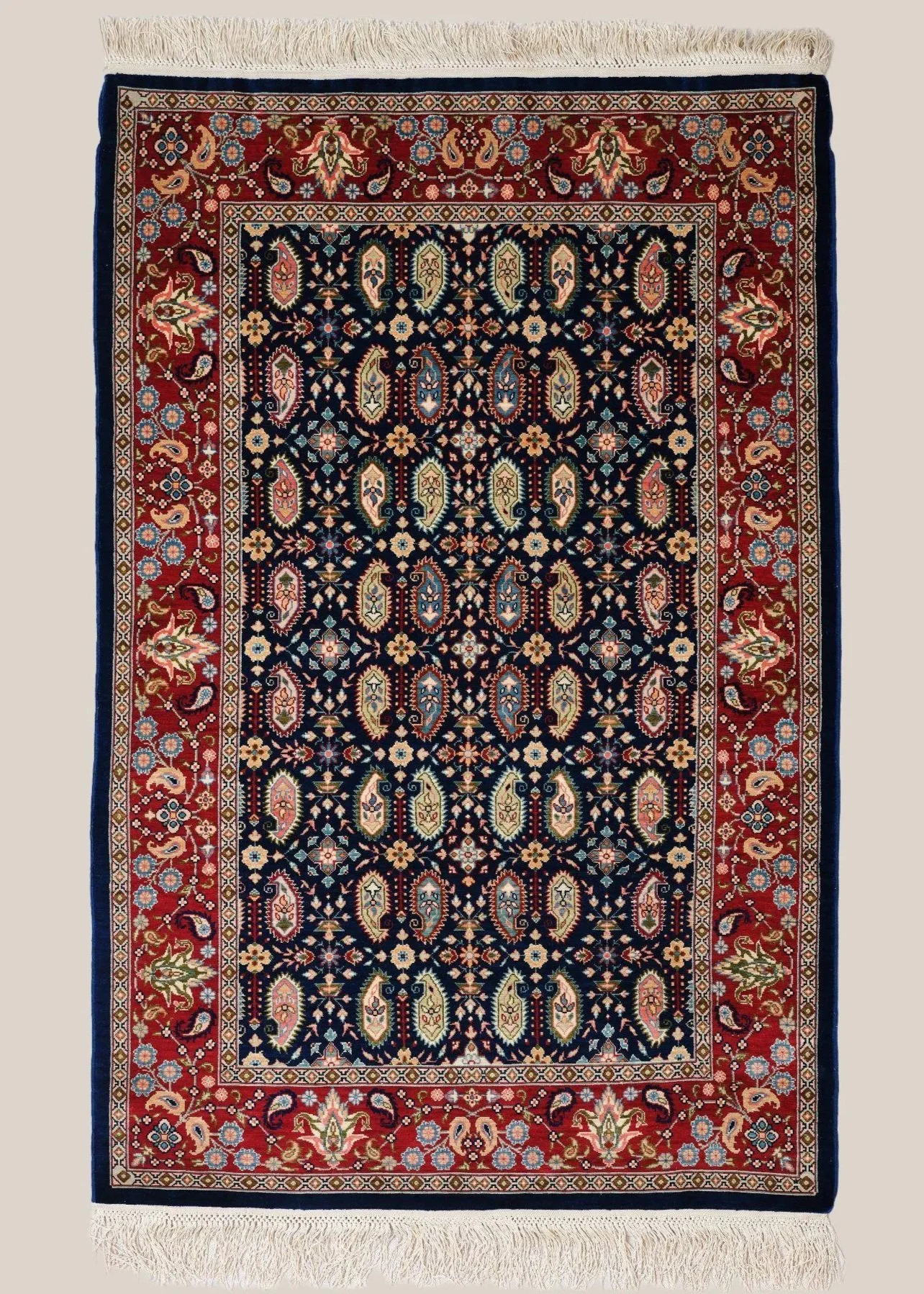
A Turkish Hereke Boteh rug, pure mulberry silk, chrome-dyed, woven with Turkish knot, featuring symbolic Boteh motifs that embody Ottoman elegance and cultural heritage.
Restored and curated by a fifth-generation family atelier, specialists in antique and collectible rugs since 1917
Interested in this piece?
Schedule a private viewing in our showroom or request a full condition and provenance report