
Home // Exclusive Collection // Afghan Agra
Afghan Agra
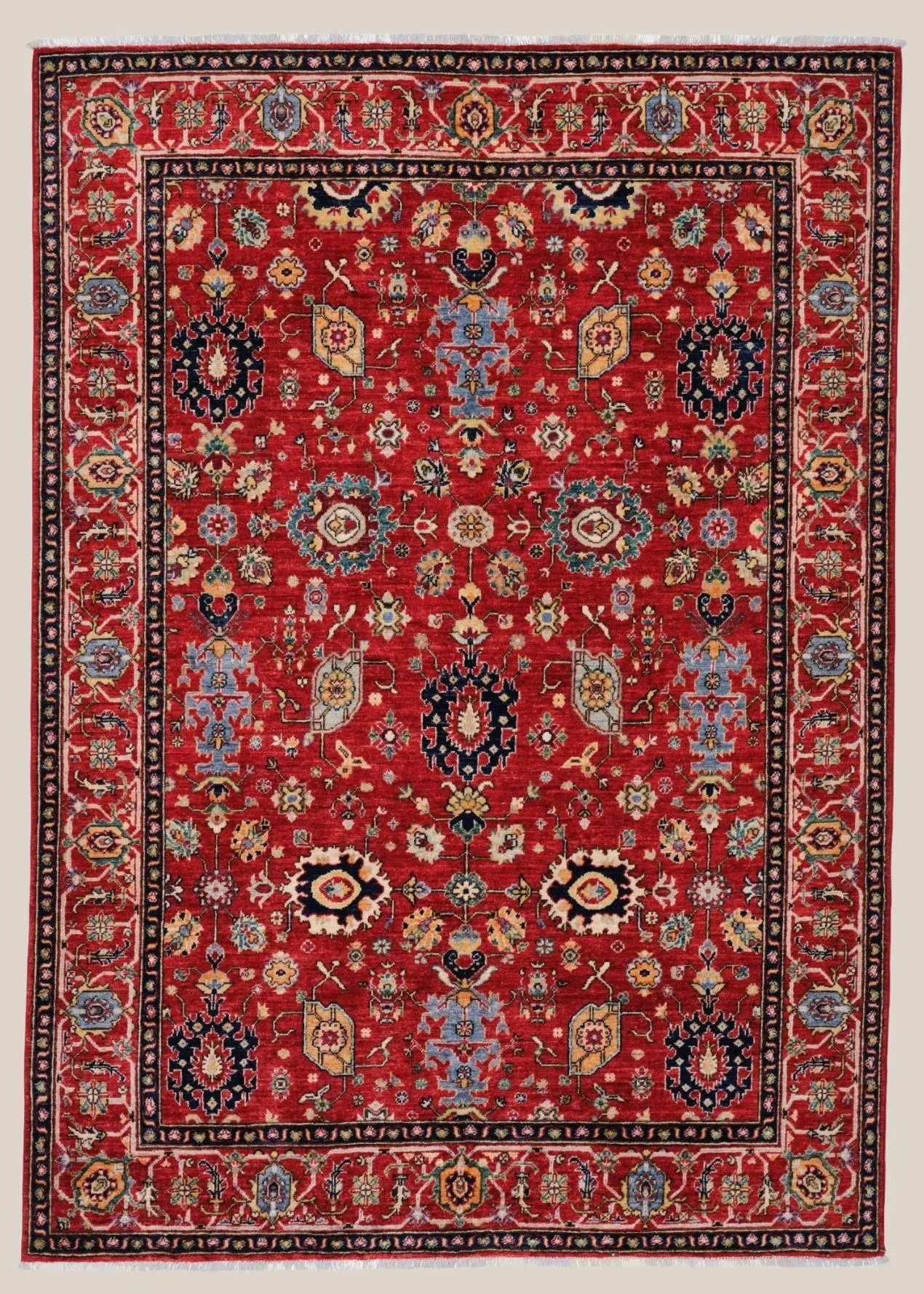
Hand-knotted Afghan Agra rug blending classic Agra floral elegance with Afghan craftsmanship, durable Turkish knots, and richly hued, naturally vegetable-dyed wool.
Price available Upon Request
Origin
Northern Afghanistan
Dimensions
2.39m x 1.72m (7’10 x 5’7)
Material
Ghazni wool with cotton warp and cotton weft
Condition
Perfect
Provenance
Sourced directly from the weaver
Composition
Ghazni wool with a cotton warp and cotton weft using the Turkish knot and natural vegetable dyes. Ghazni wool is a type of wool sourced from sheep in the Ghazni province of Afghanistan, renowned for its natural strength, resilience, and soft, oily texture. This wool is particularly prized for its use in hand-spun, hand-knotted rugs and carpets, where it contributes to the durability, velvety texture, and rich, natural colours of the finished products, due to its ability to absorb colours well.
Description
An Afghan Agra rug is a hand-knotted rug that features a design inspired by traditional Agra rugs from India, but woven in Afghanistan. These rugs blend the floral motifs and symmetrical layouts of Agra designs with the craftsmanship and wool materials often found in Afghan rugs. They are known for their intricate floral patterns, rich colour palettes, and durable construction.
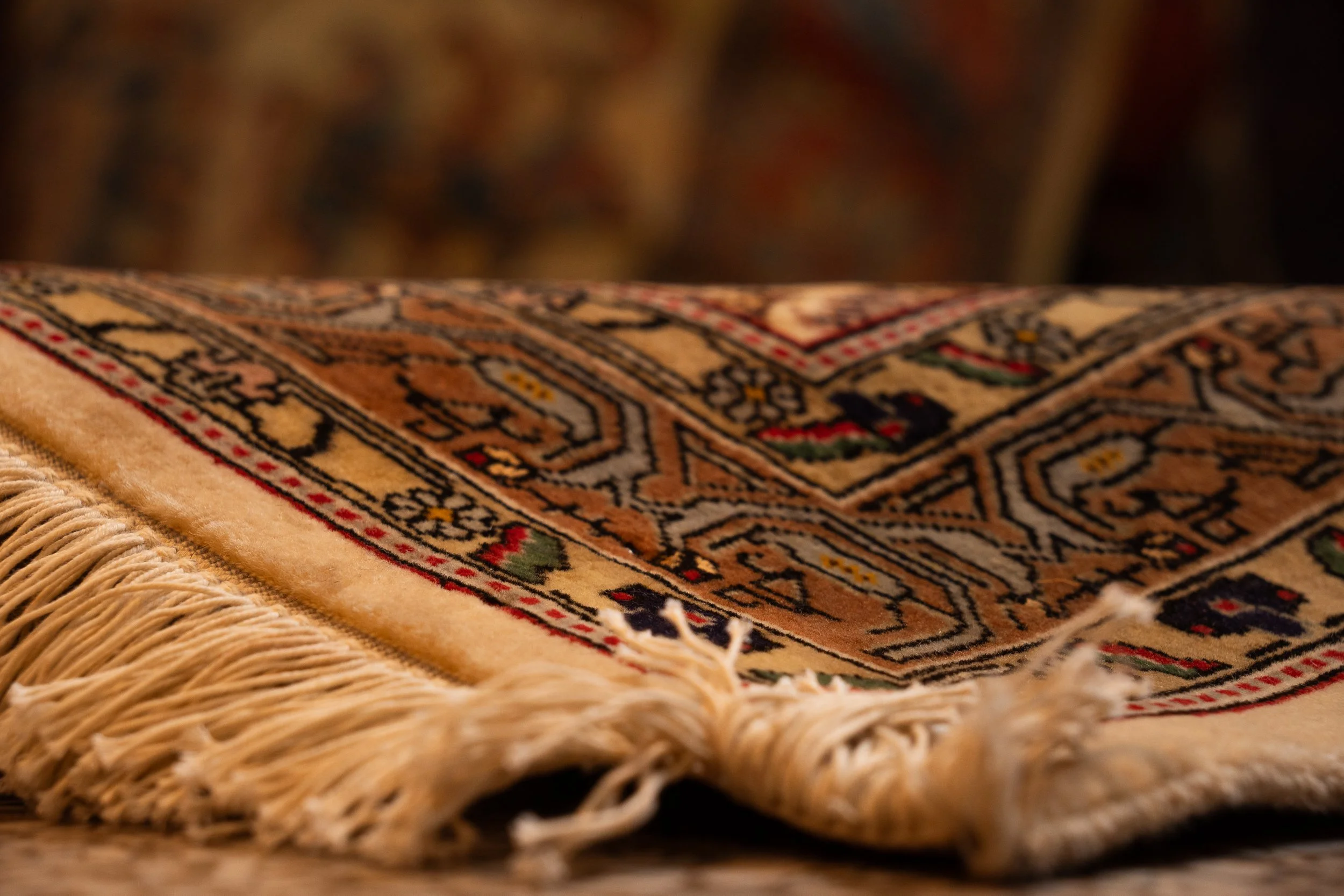
This rug has been woven using the Turkish knot, also known as the symmetrical knot or Ghiordes knot. In this traditional technique, the yarn is looped around two warp threads and pulled tight, creating a secure, balanced knot. This results in a durable, evenly textured pile that wears well over time and helps maintain the rug’s crisp design details. The Turkish knot is a hallmark of many high‑quality Anatolian, Caucasian, and tribal rugs and certain fine Persian rugs i.e Tabriz.
Vegetable dyes (also known as natural dyes) are colorants derived from plants, roots, bark, leaves, fruits, and other organic materials, used to dye textiles, including wool in rugs.
They’ve been used for hundreds of years and are valued for their rich, earthy tones, colorfastness, and environmental sustainability.
Mordanting
Before dyeing, wool is usually soaked in a mordant (like alum, iron, or copper salts) to help the dye chemically bond to the fibre.
Mordants also affect the final colour as iron darkens, alum brightens, copper can shift toward green.
Dyeing Process
The dyed fibre is simmered or soaked in the plant extract in a big pot of boiling mountain or river sourced water
Multiple dips may be needed for deeper hues.
The yarn is then rinsed, dried, and sun-exposed to solidify the colour.
Size
2.39m x 1.72m
(7’10 x 5’7)
Region
Northern Afghanistan
Provenance
Material
Ghazni wool with cotton warp & cotton weft
Condition
Perfect
Direct from weaver
Curator’s recommendations
-
2.39m x 1.72m
-
An Afghan Agra rug is a hand-knotted rug that features a design inspired by traditional Agra rugs from India, but woven in Afghanistan.
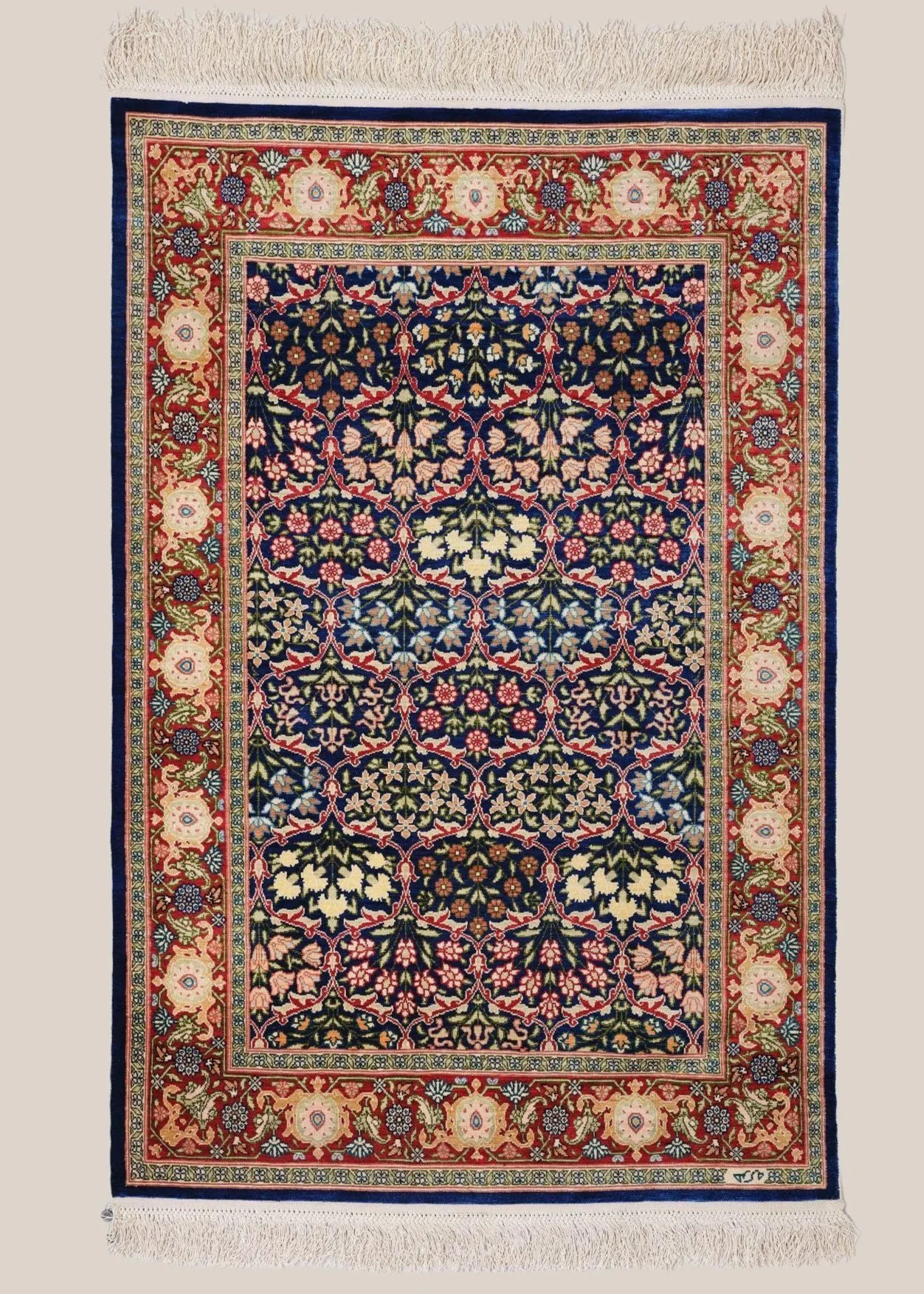
Mille Flour Turkish Hereke
-
2.39m x 1.72m
-
This silk rug exemplifies Ottoman weaving heritage, featuring intricate floral designs, Turkish knots, chrome dyes, and signatures symbolizing artistry, prestige, and exceptional craftsmanship.
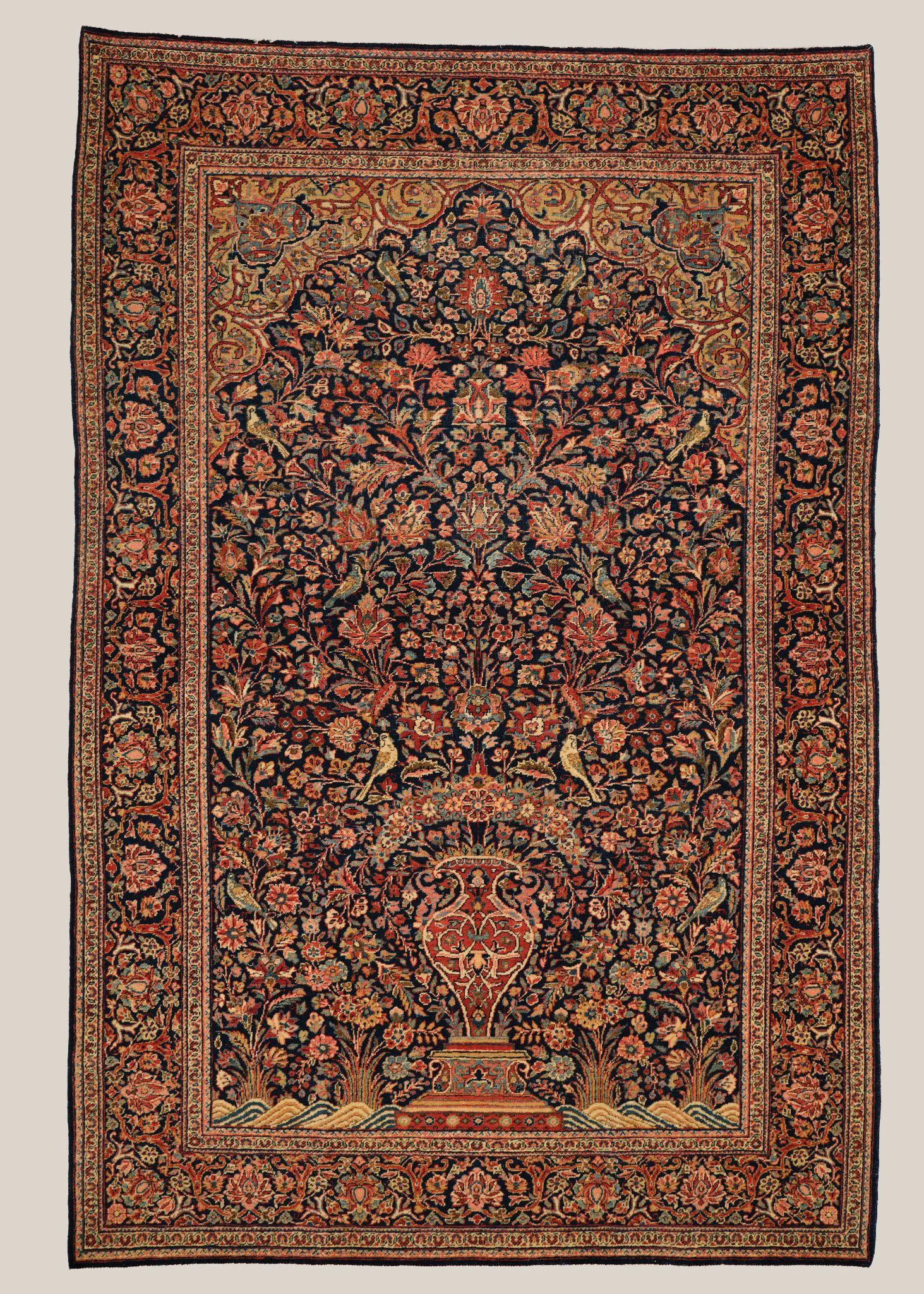
Persian Kashan Tree of Life
-
2.39m x 1.72m
-
Detailed description of Persian Kashan Tree of Life rug, materials, dyes, knots, kurk wool, craftsmanship, and symbolic design.
Turkish Boteh Hereke
-
2.39m x 1.72m
-
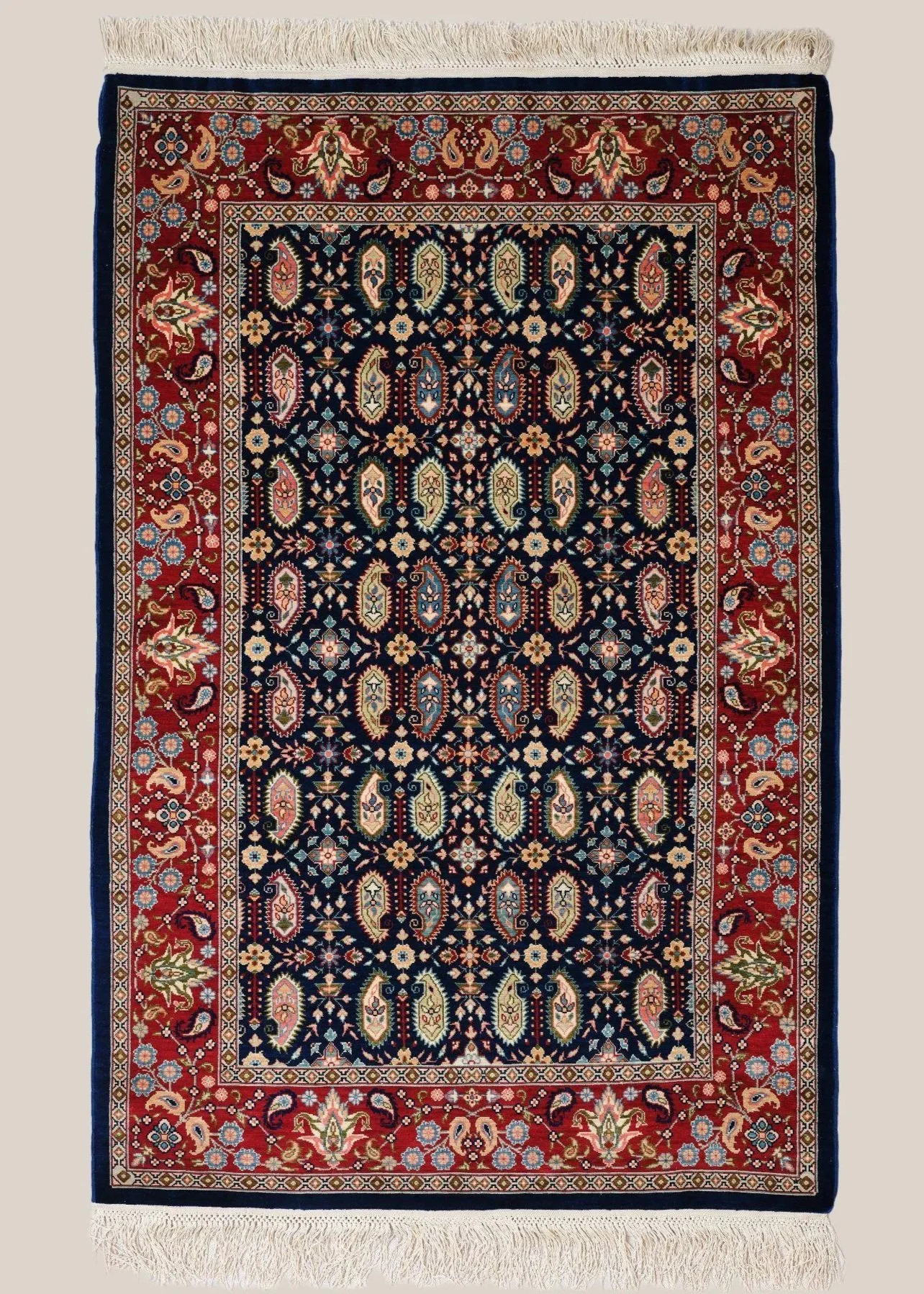
A Turkish Hereke Boteh rug, pure mulberry silk, chrome-dyed, woven with Turkish knot, featuring symbolic Boteh motifs that embody Ottoman elegance and cultural heritage.
Restored and curated by a fifth-generation family atelier, specialists in antique and collectible rugs since 1917
Interested in this piece?
Schedule a private viewing in our showroom or request a full condition and provenance report