
Home // Exclusive Collection // Persian Kashan Tree Of Life
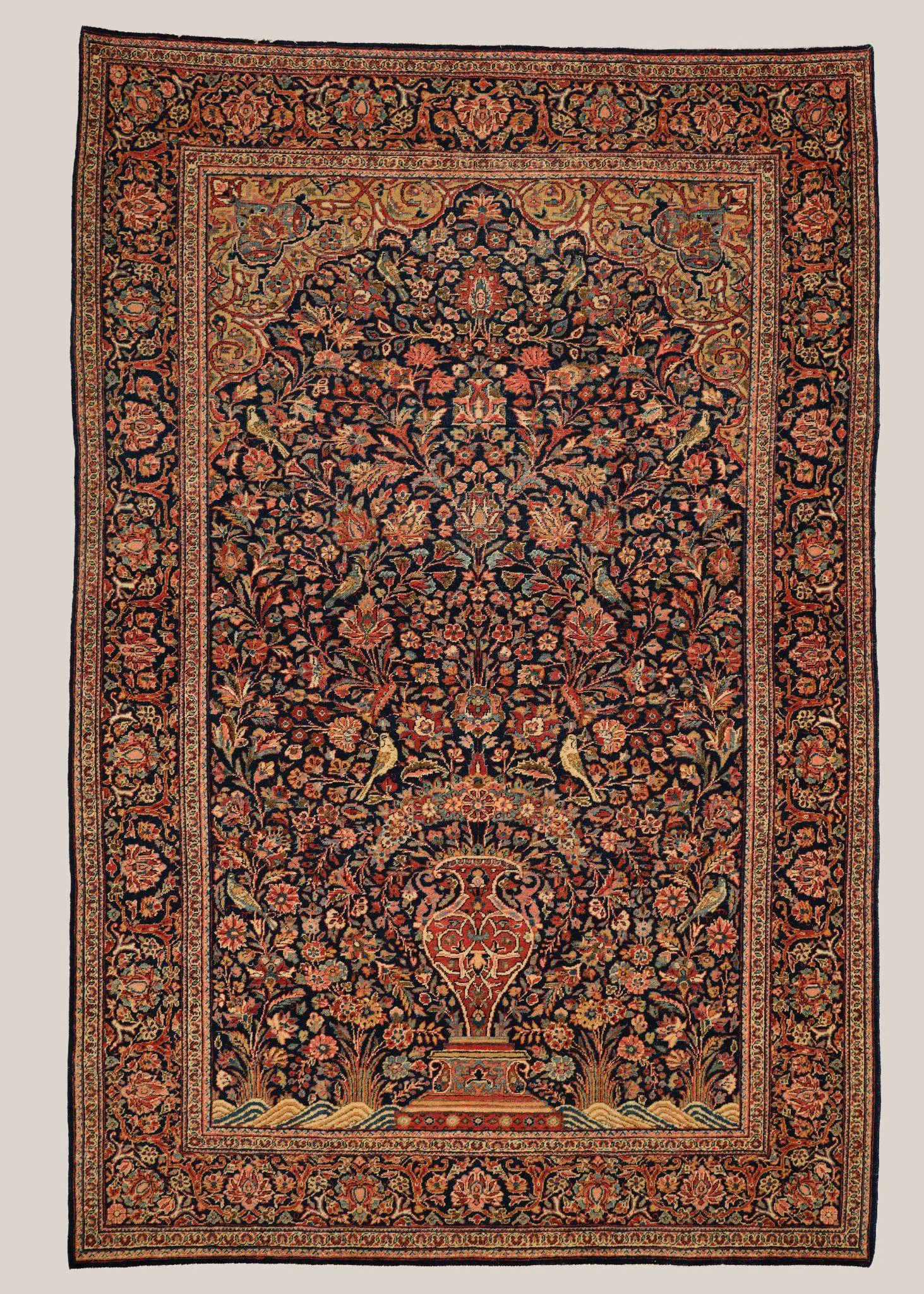
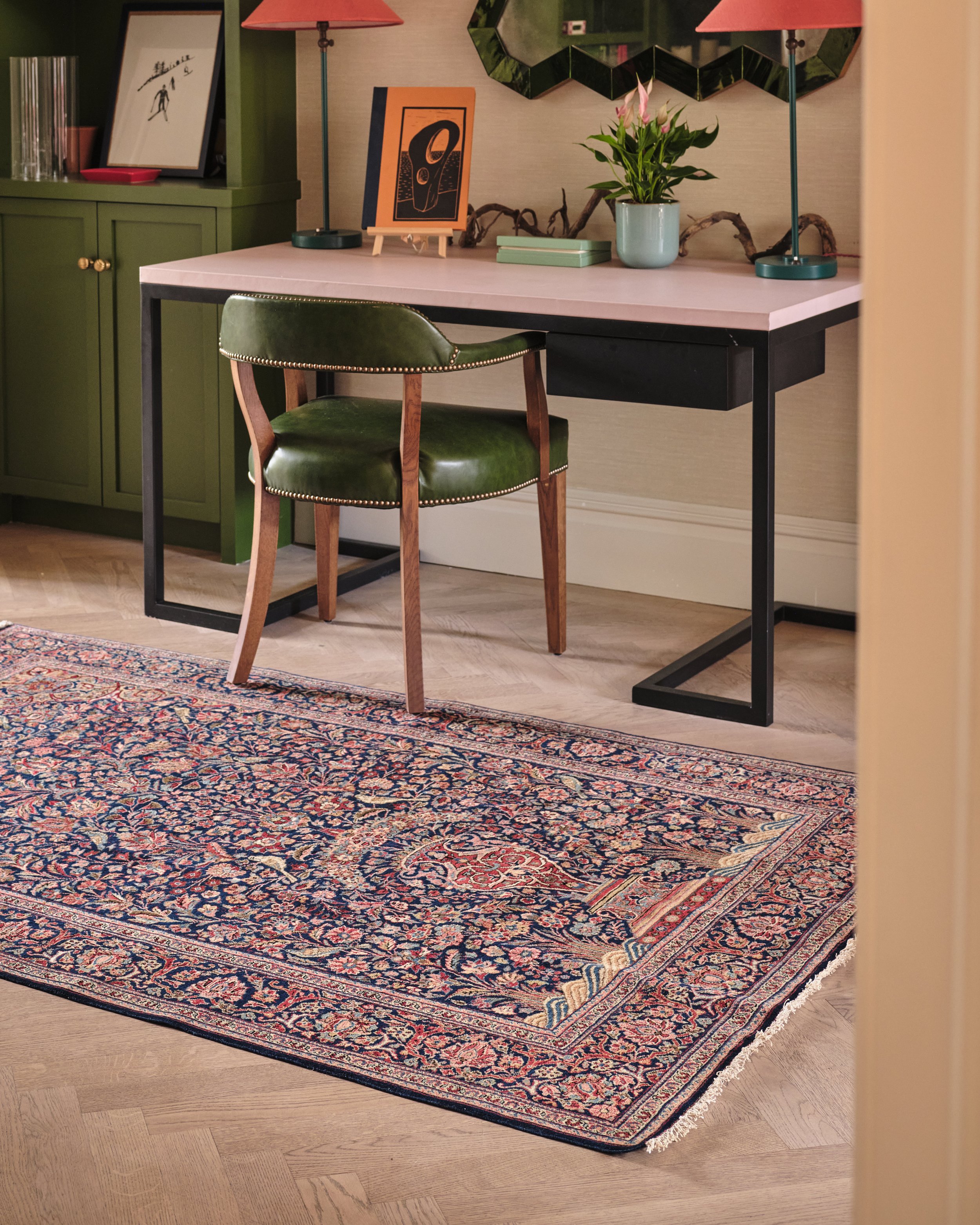
Persian Kashan Tree of Life
Fine Persian Kashan Tree of Life rug, hand knotted with crisp asymmetrical knots, rich red and indigo tones, symbolic elegance, and refined craftsmanship suited for floor or wall display.
Price available Upon Request
Origin
Kashan, Central Iran
Circa
1940
Dimensions
2.02m x 1.73m (6’7 x 5’8)
Material
Cotton warp and cotton weft/base foundation using Kurk wool
Condition
Slight wear, relative to the age of the rug
Provenance
Sourced from a private estate
Composition
Cotton warp and cotton weft/base foundation using Kurk wool. Kurk wool is the preferred sheep’s wool used in fine traditional rug‑making, prized for its exceptional softness, sheen, and durability. It is shorn exclusively from the neck and underbelly of young lambs, where the fibres are naturally shorter, silkier, and more uniform. Because these areas are limited in size, each animal yields only a small quantity of kurk wool, making it rare and highly sought after material.
This premium fibre has a natural lustre that enhances the depth and richness of dyes. Over time, the wool’s natural oils gradually release, causing colours to mellow beautifully and the surface to develop a subtle patina. These qualities give kurk wool rugs a distinctive elegance that deepens with age.
In fine Persian and Turkish weaving, including Isfahan, Nain, and Kashan production, kurk wool is often reserved for the finest and most detailed pieces, where its delicacy can highlight intricate designs and contribute to a luxurious underfoot feel.
Description
Hand‑knotted in the historic weaving city of Kashan, this fine Persian rug features the timeless Tree of Life design, which is one of the most cherished motifs in Persian carpet art. Symbolising eternal life, spiritual growth, and the connection between heaven and earth, the tree rises elegantly from a base in the field, its branches flowering outward with stylised blossoms, leaves, and birds.
The field composition is finely detailed, framed by classic Kashan borders of scrolling vines and palmettes. The palette reflects Kashan’s refined tradition: rich red, deep indigo blue, and soft ivory, accented with touches of gold or green.
Woven with high‑quality wool (often with a silk content for added lustre in finer examples) and using the Persian (asymmetrical) knot, this rug displays the crisp definition and smooth pile characteristic of the region’s best work. Its craftsmanship and symbolic design make it equally suited as a decorative floor covering or as a striking wall display.
This rug has been dyed using chrome dyes, which are synthetic dyes that use chromium salts (chromium mordants) to fix the colour to the wool fibres. The process was developed in the late 19th and early 20th centuries and quickly became popular in the rug‑making world because it solved two key problems of earlier synthetic dyes: poor lightfastness and colour bleeding. Chrome‑dyed rugs often have clear, even, uniform colours without the natural “abrash” (subtle colour variation) seen in vegetable‑dyed rugs.
Many 20th‑century Persian, Turkish, and Afghan rugs, especially those made for export, used chrome dyes. In fine handmade rugs, chrome dyes are often mixed with vegetable dyes to achieve a balance of vibrancy and natural variation.
The rug uses the Persian knot, also known as the asymmetrical knot or Senneh knot, which is one of the two main types of knots used in hand-knotted rug weaving The Persian knot is an asymmetrical knot that wraps around one warp thread and under the adjacent one, allowing for finer detail and greater density in the rug design. The yarn is looped around one warp thread (vertical foundation fibre) and then pulled under the next, not enclosing both warps. This asymmetry creates a slightly offset pile knot and the ends of the knot come out between the warps, giving a more compact and flexible surface.
Restoration & Conservation
Our master conservators employed minimal intervention techniques to preserve authenticity. Original wool and dyes were carefully matched during restoration, ensuring structural integrity without compromising historical value.
2.02m x 1.73m
(6’7 x 5’8)
Size
Material
Cotton warp and cotton weft/base foundation using Kurk wool
Kashan, Central Iran
Region
Age
Condition
Circa 1940
Provenance
Slight wear, relative to the age of the rug
Sourced from private estate
Curator’s recommendations
-
2.39m x 1.72m
-
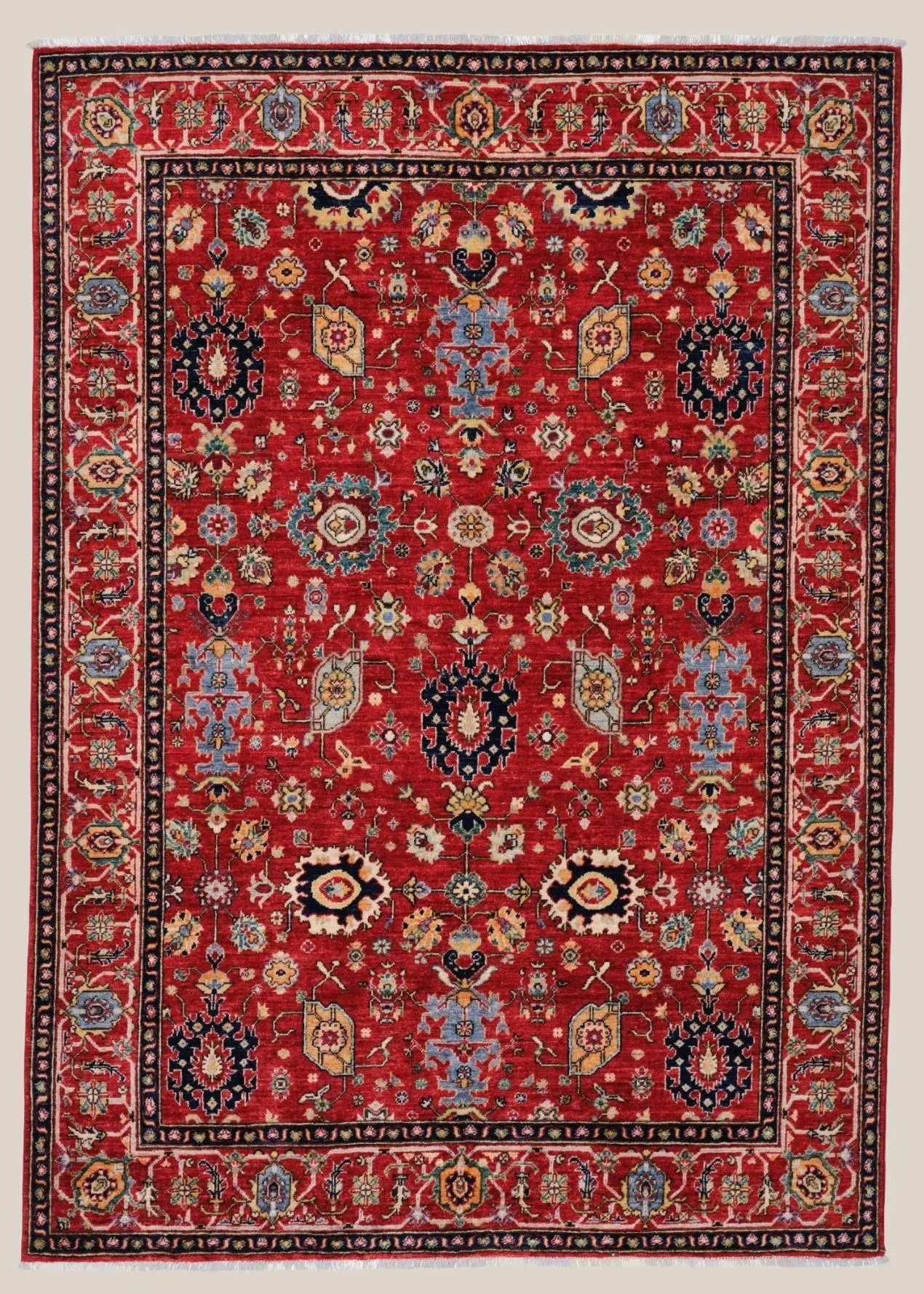
An Afghan Agra rug is a hand-knotted rug that features a design inspired by traditional Agra rugs from India, but woven in Afghanistan.
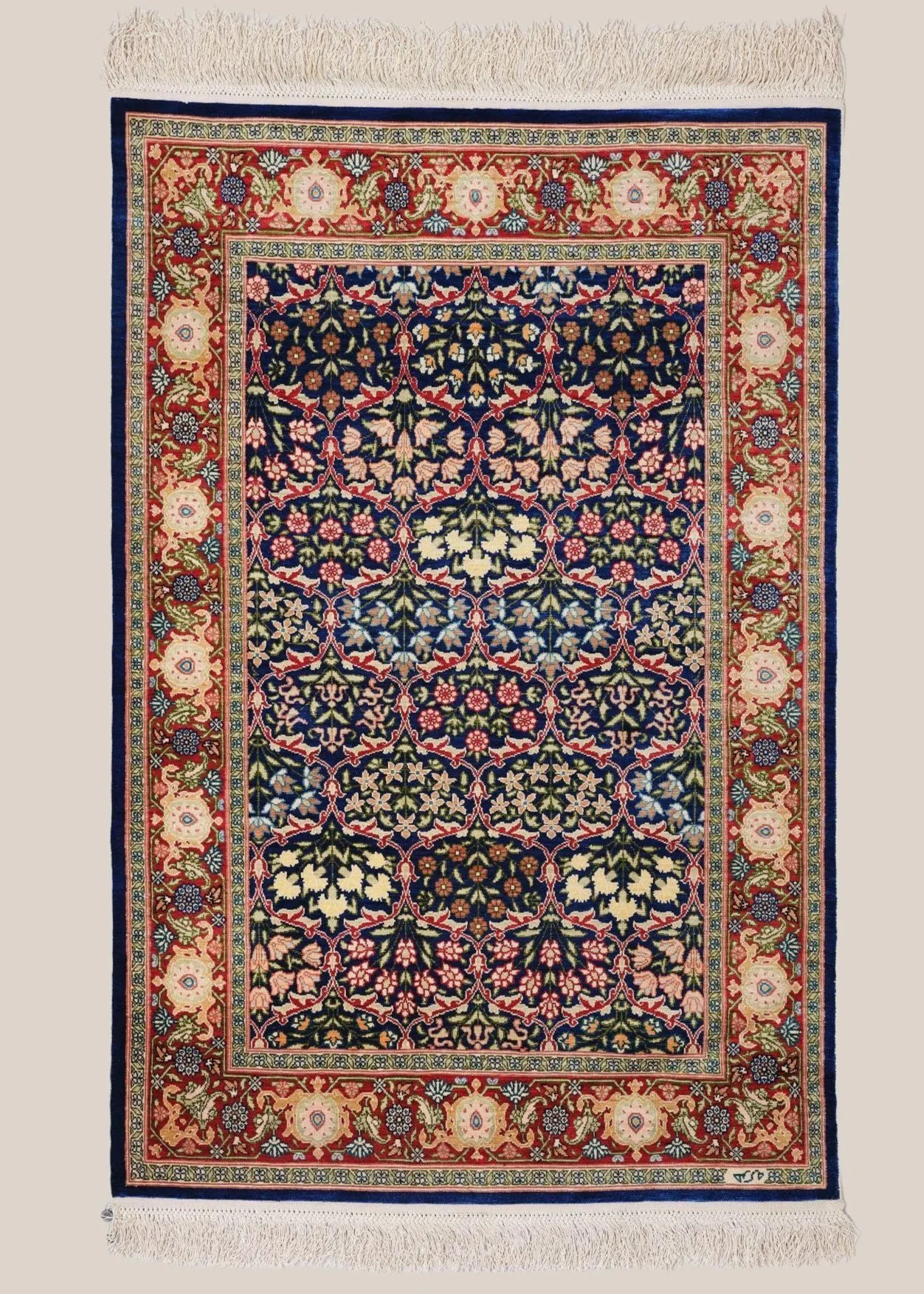
Mille Flour Turkish Hereke
-
2.39m x 1.72m
-
This silk rug exemplifies Ottoman weaving heritage, featuring intricate floral designs, Turkish knots, chrome dyes, and signatures symbolizing artistry, prestige, and exceptional craftsmanship.
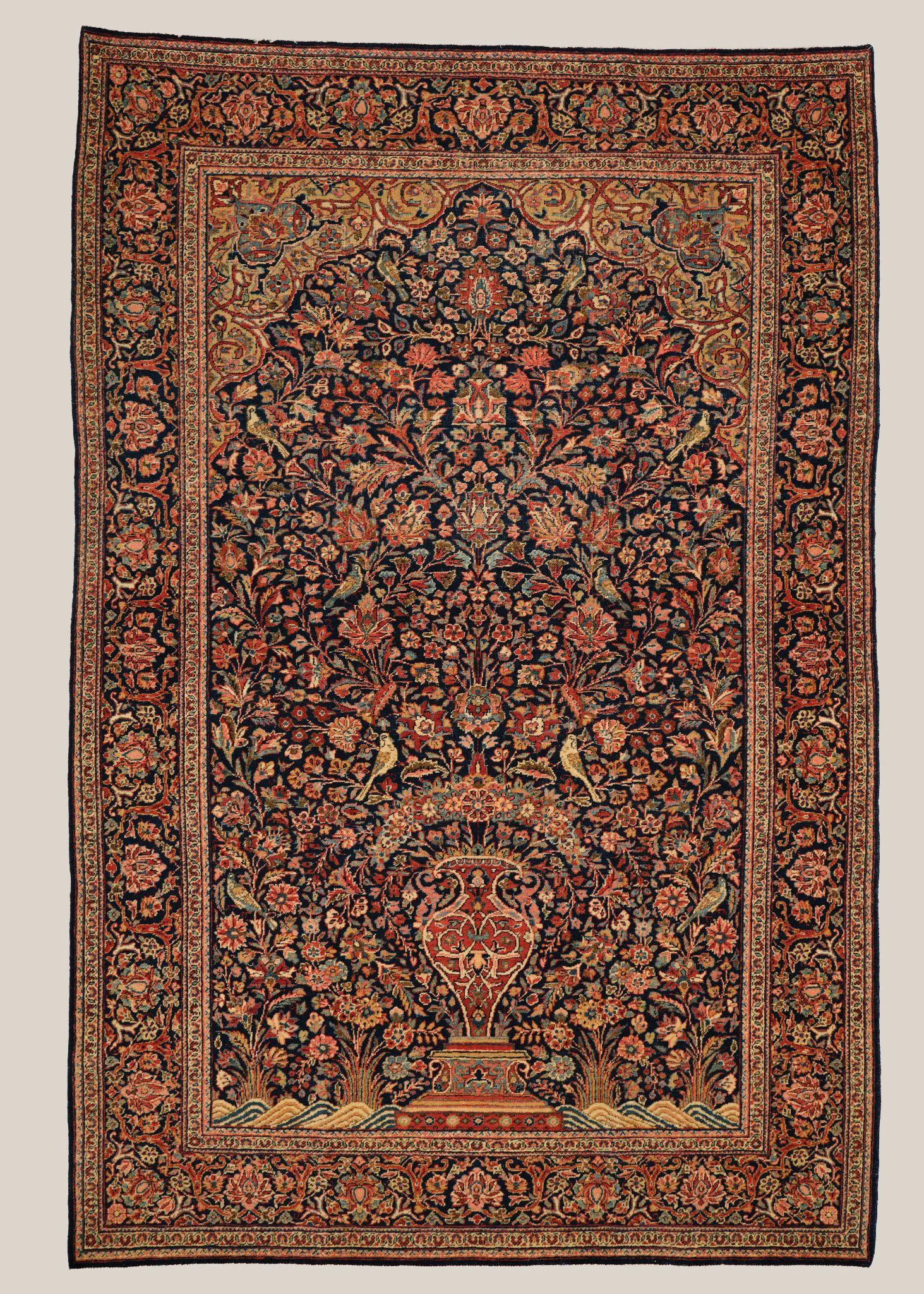
Persian Kashan Tree of Life
-
2.39m x 1.72m
-
Detailed description of Persian Kashan Tree of Life rug, materials, dyes, knots, kurk wool, craftsmanship, and symbolic design.
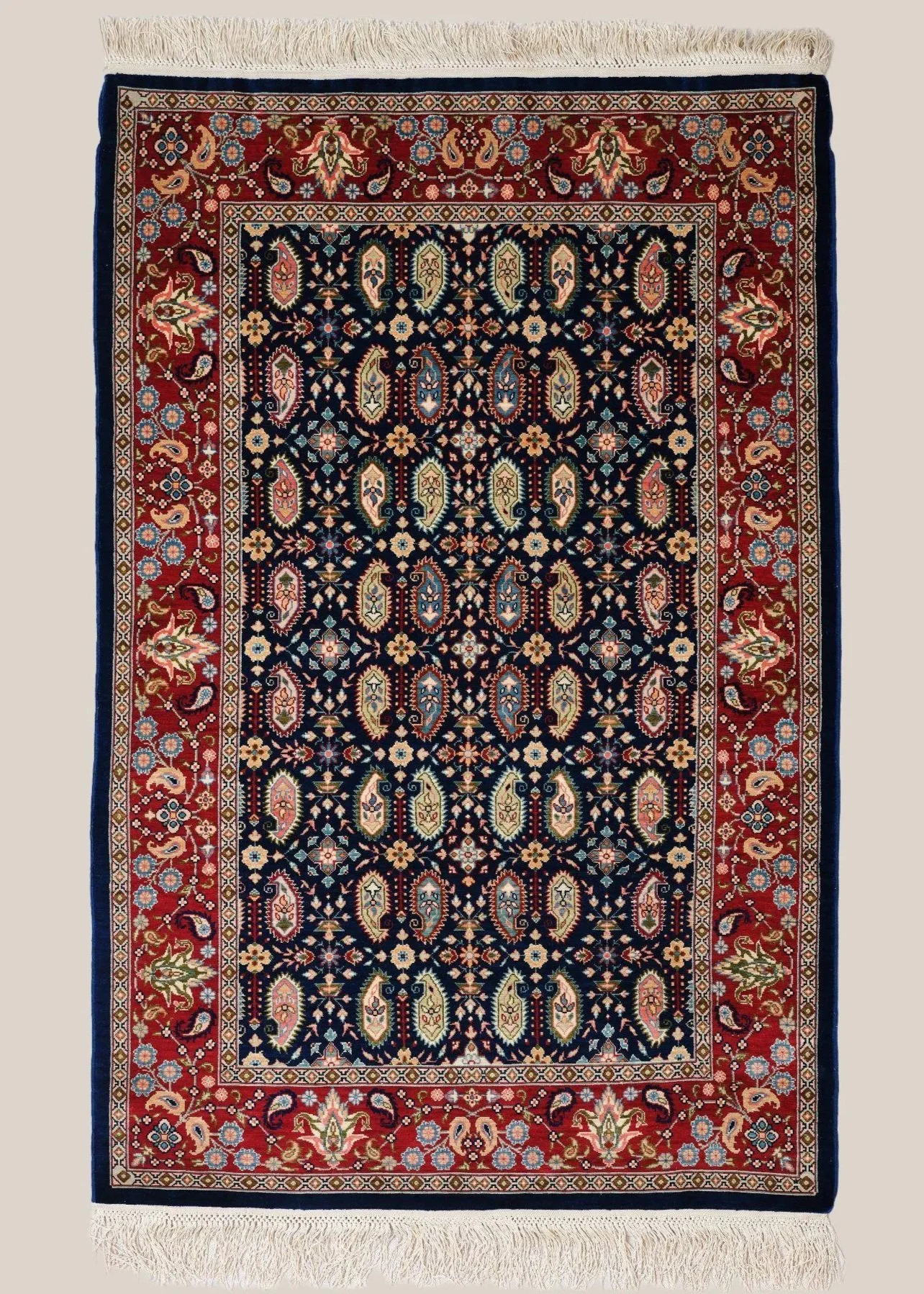
Turkish Boteh Hereke
-
2.39m x 1.72m
-
A Turkish Hereke Boteh rug, pure mulberry silk, chrome-dyed, woven with Turkish knot, featuring symbolic Boteh motifs that embody Ottoman elegance and cultural heritage.
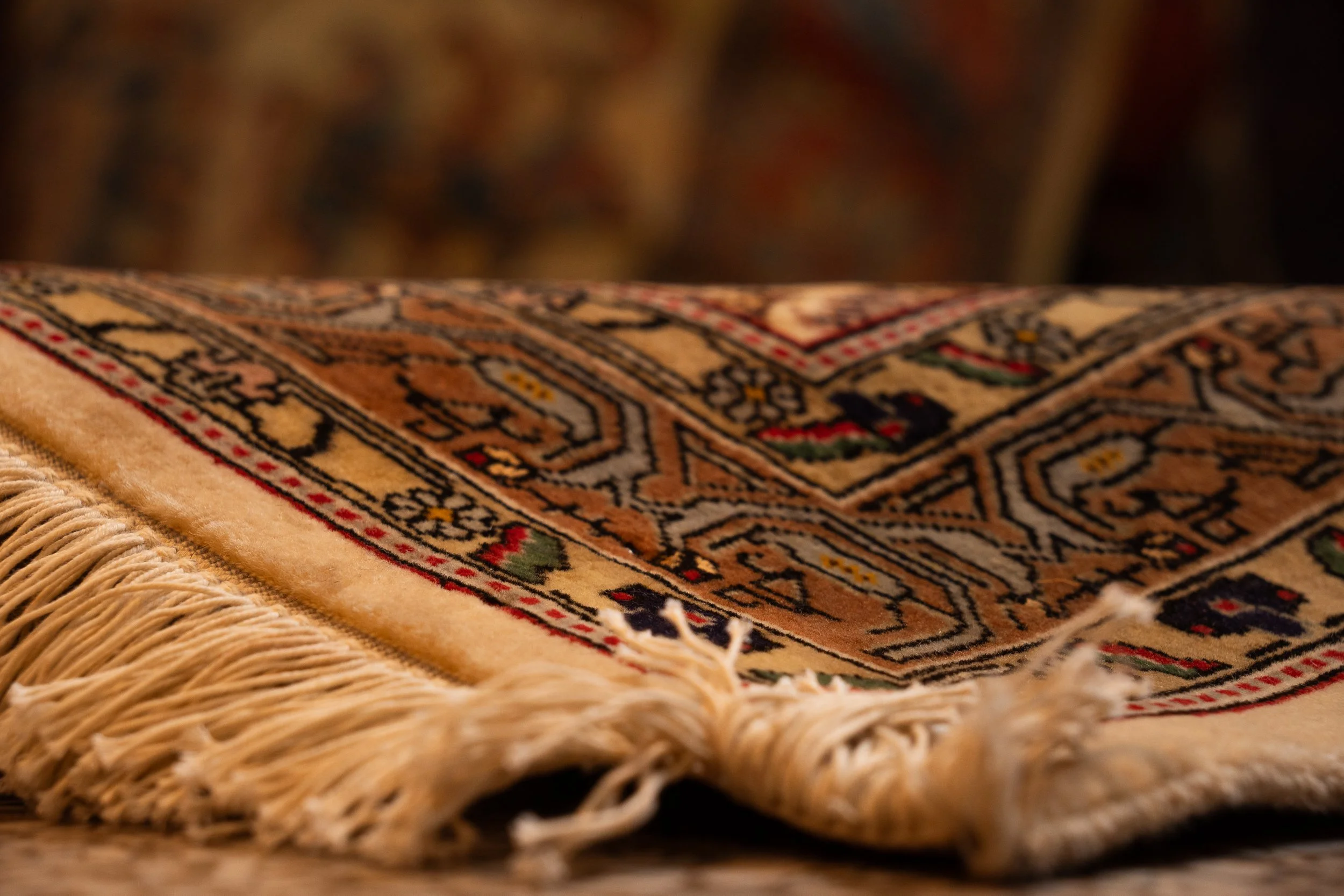
Restored and curated by a fifth-generation family atelier, specialists in antique and collectible rugs since 1917
Interested in this piece?
Schedule a private viewing in our showroom or request a full condition and provenance report