
Home // Exclusive Collection // Afghani Kilim (Persian design - Mazandaran Kilim)
Afghani Kilim (Persian design - Mazandaran Kilim)
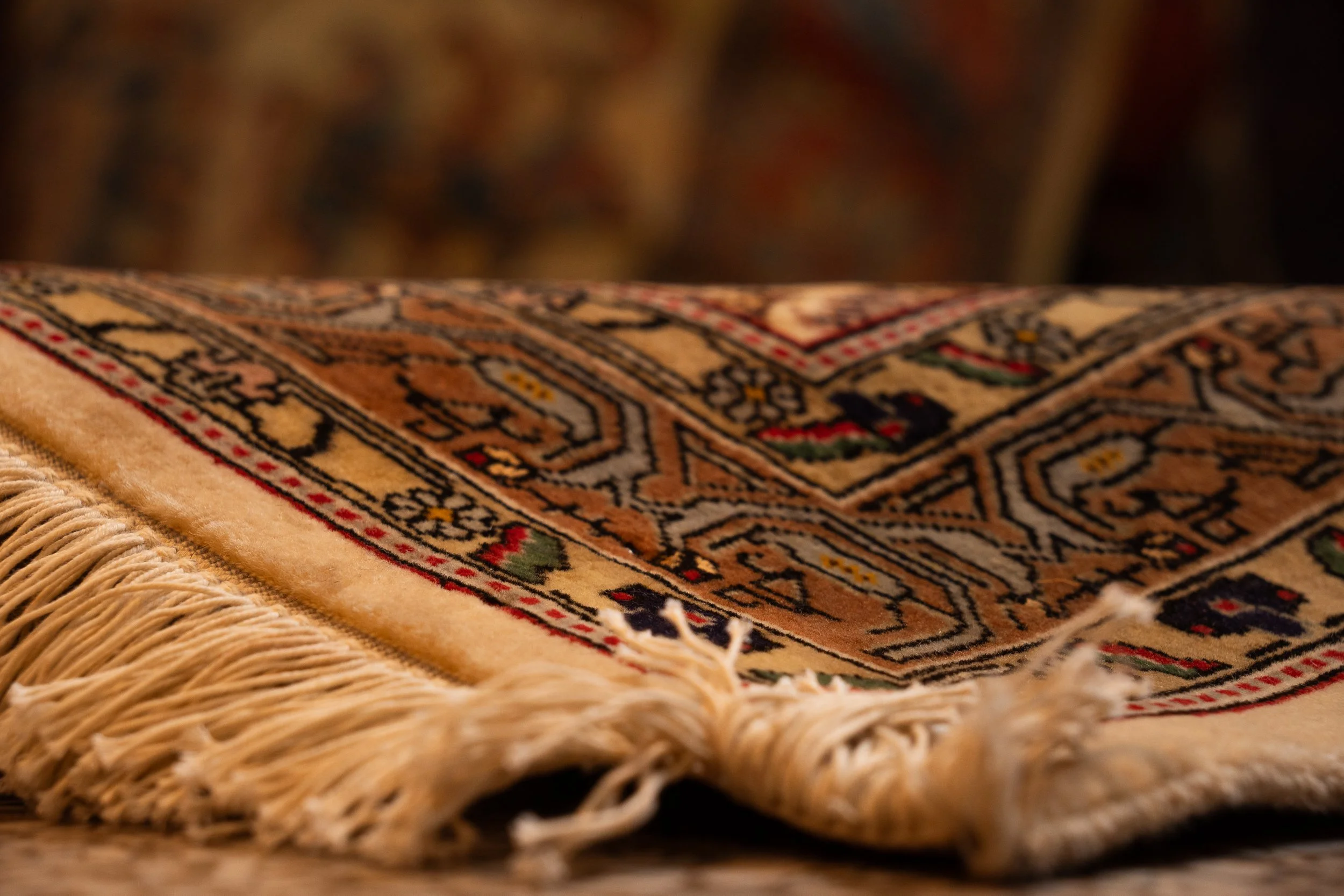
A finely woven kilim blending traditional craftsmanship with modernist Bauhaus geometry, featuring natural‑dyed bold patterns, lightweight construction, and timeless artistry ideal for luxury interiors today.
Price on application
Origin
Afghanistan
Circa
2020
Dimensions
-
Material
Ghazni wool with a cotton warp and cotton weft
Condition
Perfect
Provenance
Sourced directly from the weaver
Composition
Ghazni wool with a cotton warp and cotton weft using the Turkish knot and natural vegetable dyes. Ghazni wool is a type of wool sourced from sheep in the Ghazni province of Afghanistan, renowned for its natural strength, resilience, and soft, oily texture. This wool is particularly prized for its use in hand-spun, hand-knotted rugs and carpets, where it contributes to the durability, velvety texture, and rich, natural colours of the finished products, due to its ability to absorb colours well.
Description
A Kilim is a type of flat-woven textile, traditionally made across the Middle East, Anatolia (modern-day Turkey), the Caucasus, Central Asia, and parts of North Africa. Unlike knotted pile rugs, Kilims are produced using a flat weave technique, which means that they have no pile and are woven by interlacing warp and weft threads on a loom. This creates a lightweight, reversible fabric that is both decorative and functional.
Kilims are distinguished by their bold geometric designs, often featuring motifs like diamonds, hooks, crosses, or stylised animals. These patterns are not merely decorative; many carry symbolic meanings linked to protection, fertility, or tribal identity. The colours are traditionally made with natural vegetable dyes, resulting in rich but earthy tones that mellow beautifully with age.
The weaving technique most commonly used in Kilims is known as a “slit weave”, in which the weft yarns are tightly pulled back at the edge of a colour area, leaving a small slit. This allows for sharp, crisp patterns but can also create small gaps in the textile. This characteristic is often visible and is considered a hallmark of traditional craftsmanship.
Kilims are made by tribal or village weavers, often women, and historically served multiple purposes: as floor coverings, wall hangings, saddlebags, prayer mats, tent partitions, or bedding. Because they are flat-woven and lightweight, they are easy to transport, which suited the nomadic lifestyles of many of the people who produced them.
The Bauhaus kilim design refers to a modernist, geometric style of flat-weave rug that emerged from the influential Bauhaus art school in Germany during the early 20th century (founded in 1919 by Walter Gropius). While the Bauhaus is best known for architecture and industrial design, textiles played a crucial role—particularly in the Bauhaus Weaving Workshop, where several pioneering female artists redefined what handwoven design could be.
Several Bauhaus textile artists, including Gunta Stölzl, played a key role in adapting kilim weaving methods into modern art forms. The Bauhaus weaving workshop (Weberklasse) was one of the few areas where women could work within the movement. There, they explored how to merge craft and modern design, often using looms to create experimental kilim-like tapestries. Later, some Bauhaus-inspired kilims were woven outside Germany, especially in Eastern Europe, Turkey, or Scandinavia, as modernists and Bauhaus émigrés spread their influence.
These kilims adopt the design principles of the Bauhaus school: minimalism, functionality, abstraction, and geometric clarity. While traditional kilims, especially from Anatolia, Persia, and the Caucasus, tend to feature symbolic motifs rooted in folk culture, the Bauhaus approach stripped these designs down to their essential forms, often focusing on pure geometry, asymmetry, and bold colour contrasts. These kilims were not made to symbolise tribal meanings or fertility motifs, but rather to explore form, colour theory, spatial relationships, and modernist design.
In addition, this rug has been dyed with vegetable dyes (also known as natural dyes) are colorants derived from plants, roots, bark, leaves, fruits, and other organic materials, used to dye textiles, including wool in rugs.
They have been used for hundreds of years and are valued for their rich, earthy tones, colorfastness, and environmental sustainability.
Mordanting
Before dyeing, wool is usually soaked in a mordant (like alum, iron, or copper salts) to help the dye chemically bond to the fibre.
Mordants also affect the final colour as iron darkens, alum brightens, copper can shift toward green.
Dyeing Process
The dyed fibre is simmered or soaked in the plant extract in a big pot of boiling mountain or river sourced water
Multiple dips may be needed for deeper hues.
The yarn is then rinsed, dried, and sun-exposed to solidify the colour.

-
Size
Material
Ghazni wool with a cotton warp and cotton weft
Afghanistan
Region
Condition
Provenance
Perfect
Sourced directly from the weaver
Curator’s recommendations
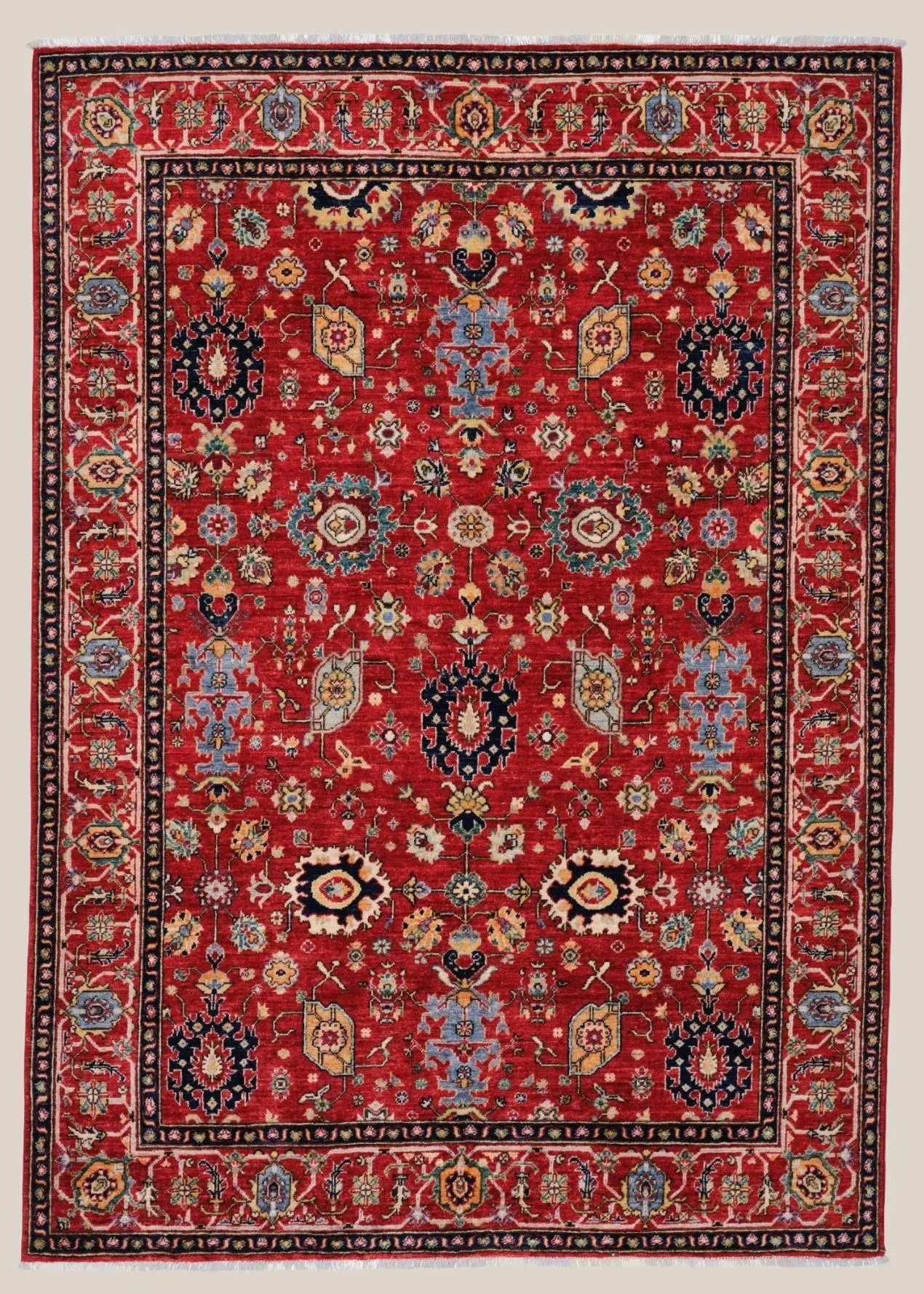
-
2.39m x 1.72m
-
An Afghan Agra rug is a hand-knotted rug that features a design inspired by traditional Agra rugs from India, but woven in Afghanistan.
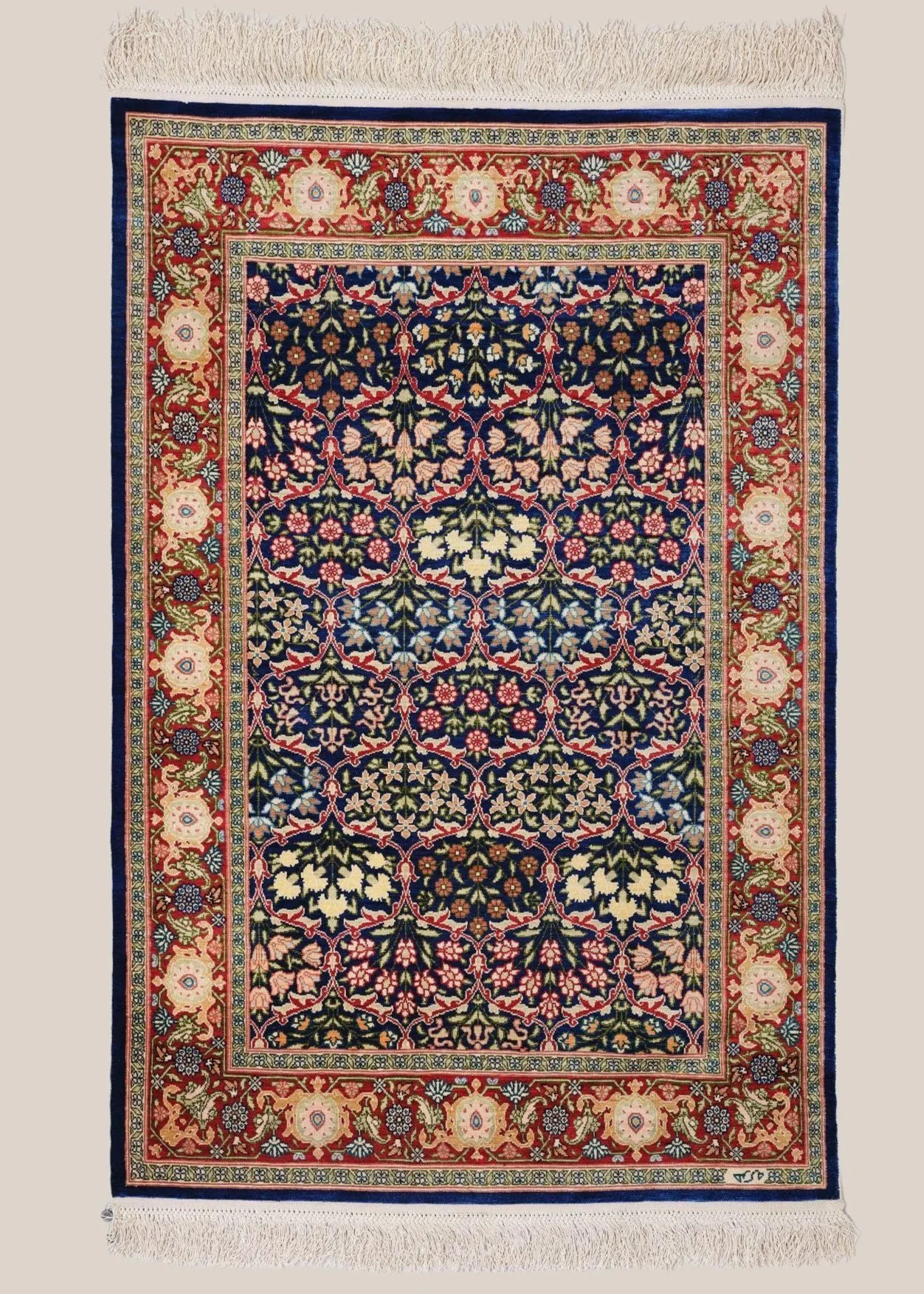
Mille Flour Turkish Hereke
-
2.39m x 1.72m
-
This silk rug exemplifies Ottoman weaving heritage, featuring intricate floral designs, Turkish knots, chrome dyes, and signatures symbolizing artistry, prestige, and exceptional craftsmanship.
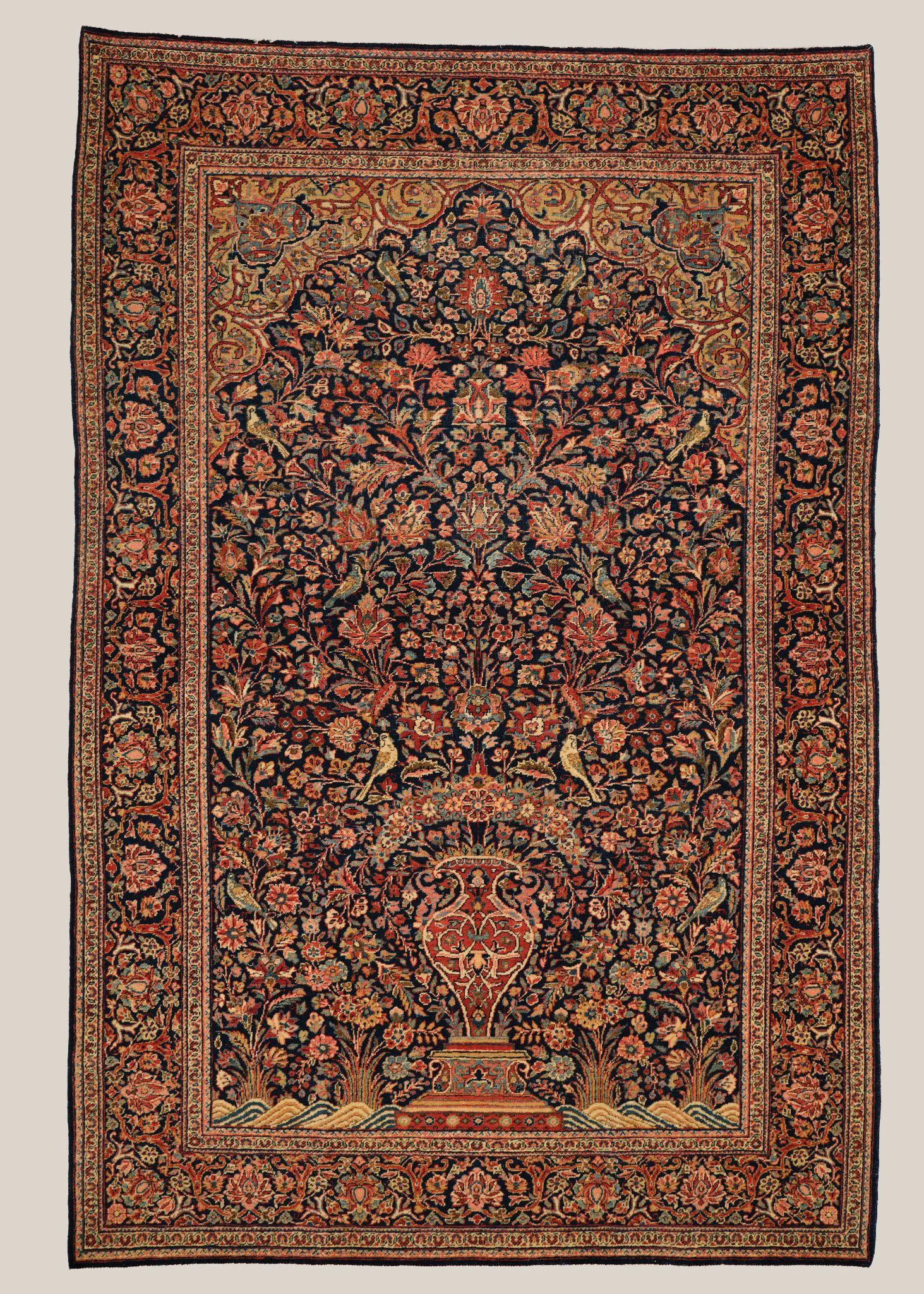
Persian Kashan Tree of Life
-
2.39m x 1.72m
-
Detailed description of Persian Kashan Tree of Life rug, materials, dyes, knots, kurk wool, craftsmanship, and symbolic design.
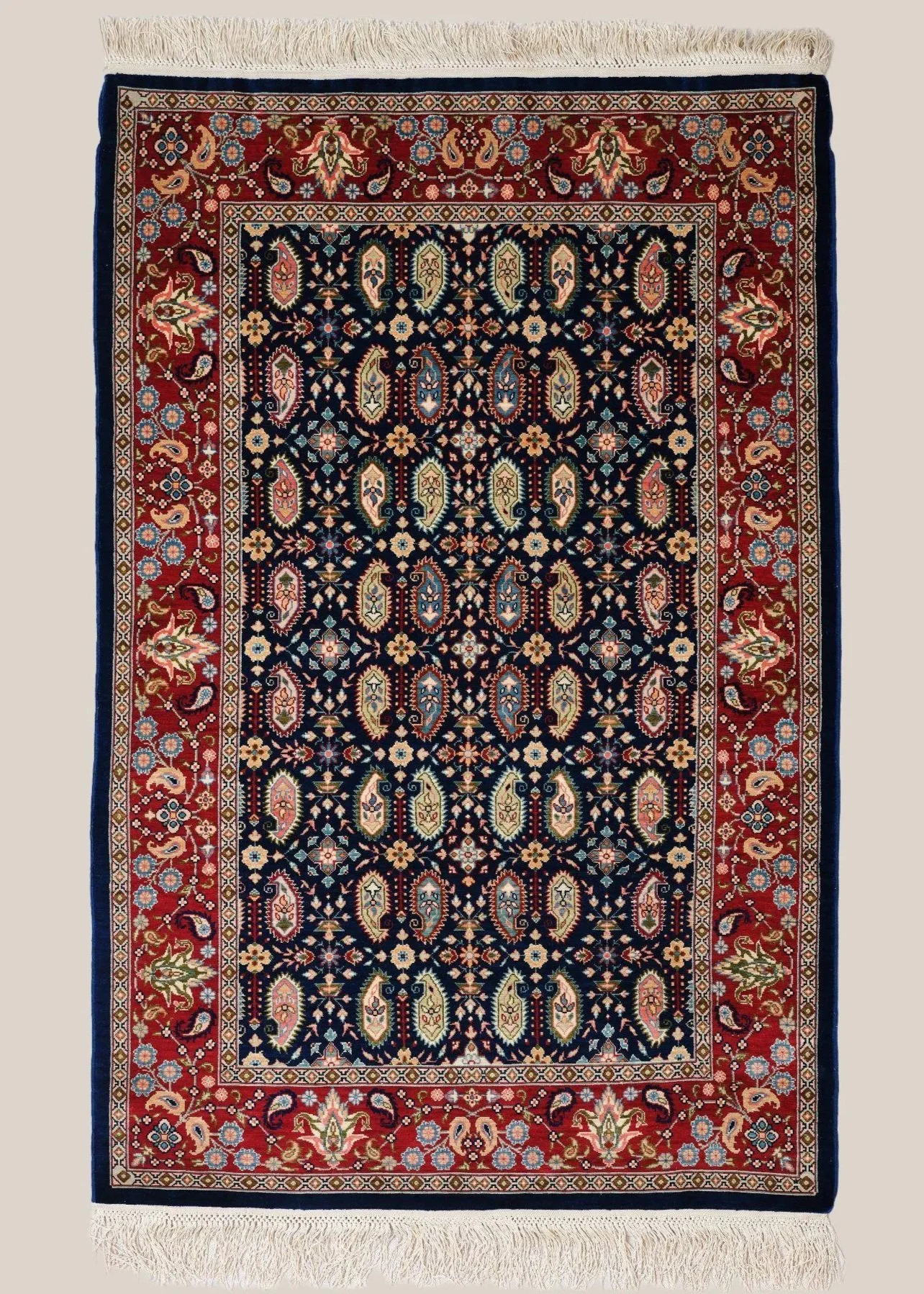
Turkish Boteh Hereke
-
2.39m x 1.72m
-
A Turkish Hereke Boteh rug, pure mulberry silk, chrome-dyed, woven with Turkish knot, featuring symbolic Boteh motifs that embody Ottoman elegance and cultural heritage.

Restored and curated by a fifth-generation family atelier, specialists in antique and collectible rugs since 1917

Interested in this piece?
Schedule a private viewing in our showroom or request a full condition and provenance report